
A year after its debut in the summer of 2025, the LAAC Academy returned for its second edition in August. Players from 12 nations took part in the Academy, which is part of an overall commitment from the Masters Tournament, The R&A and the USGA to elevate the game of golf in Latin America. The Academy was created to provide additional learning opportunities for golfers in the region.
“I think the founding partners of the Latin America Amateur, what they do for the game in Latin America, is absolutely great to grow the game in different parts of the world,” said Eduardo Marín, a 17-year-old from Nicaragua. “Golf is obviously very centralized in the United States and Europe, so being able to expand the game in other parts and giving the players the opportunity at this LAAC Academy is great. We learn tools that we can take back to our countries and teach other kids that have the same goals and aspirations as us. So I think it’s amazing.”
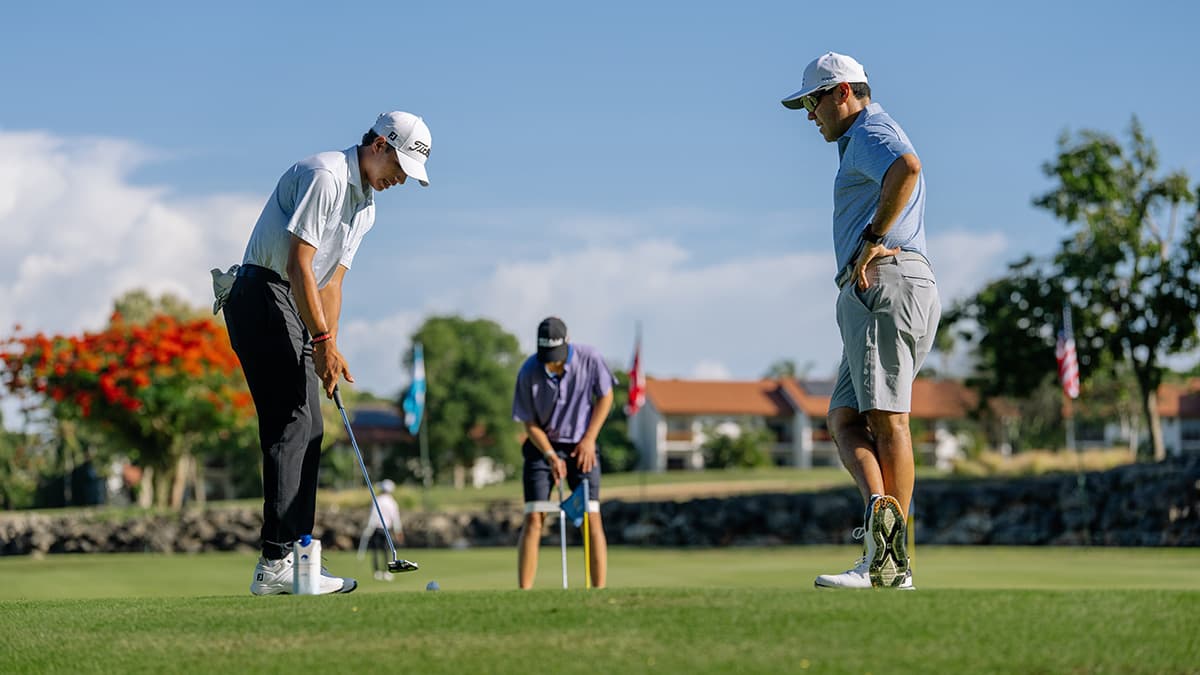
The LAAC Academy is a weeklong training event where players are introduced to world-class instruction in key areas of elite competition such as short-game skills, sport psychology, stat-tracking, strength and conditioning, swing analysis and technical swing improvement. The event’s founding partners cover the costs of the Academy for players and Casa de Campo in the Dominican Republic has hosted each of the first two editions. Casa de Campo has previously hosted the Latin America Amateur three times (2016, 2019 and 2022).

We learn tools that we can take back to our countries and teach other kids that have the same goals and aspirations as us. So I think it’s amazing.
The 2026 edition featured the following players: Matías Monasterio (Bolivia), Andrés Duisberg (Chile), Waldo Aguasvivas (Dominican Republic), Diego Albuja (Ecuador), Marco Samour (El Salvador), Matías Calderón (Guatemala), Malaquías Vargas (Honduras), Kemari Morris (Jamaica), Eduardo Marín (Nicaragua), Tomás Del Grosso (Panama), Juan Cruz Esmoris (Uruguay) and Andrés Martínez (Venezuela).
One of the highlights of the week was the opportunity to compete on course at Casa de Campo’s Teeth of the Dog, which was new in 2026.
The coaching team included swing coach Hernán Rey; Andrés Echavarría, focused on course management and short game; Santiago Garat, responsible for putting; and Miguel Ordóñez, who served as a special advisor. The second edition also introduced new areas of training with the addition of Iván Tcherkaski, a sports psychologist, and Manuel Álvarez, a physiotherapist, further strengthening the program’s comprehensive approach.
“This week was incredible; probably one of the best weeks I’ve ever had,” said Malaquías Vargas, a 19-year-old from Honduras. “It was great to have such professional coaches with us, and the information that we received is unique information. Not every golfer has the opportunity to absorb all of this information. It was great. The mental part of the game has been a big learning for me this week. A lot of golfers don’t understand that that part is probably 80-90 percent of what golf is. That will be my main takeaway to bring home and tell other kids.”